 English
 Russian
 French
 Spanish
 Portuguese
 Arabic
 Vietnamese
 Turkish

soil
A high-tech enterprise focusing on the development and application of X-ray technology products, committed to becoming a leading supplier of X-ray industrial testing solutions.
Demystifying XRF Analysis of Soil Samples: A Beginner's Guide
Have you ever wondered what’s really in the soil beneath your feet? Whether you're a farmer concerned about crop nutrients, an environmentalist tracking pollution, or a homeowner worried about lead in the garden, understanding soil composition is crucial. Enter XRF Analysis—a powerful, high-tech sounding term that’s more accessible and useful than you might think.
This guide will break down the science, the process, and the incredible value of XRF soil analysis into simple, digestible parts. Let’s demystify it together.
What is XRF, Anyway?
Let’s start with the acronym: X-Ray Fluorescence (XRF).
In simple terms, it’s a non-destructive technology that uses X-rays to identify and measure the elements present in a material—like soil. Imagine shining a special light on a soil sample that makes it "glow" back with its own unique signature. By reading that glow, scientists can tell exactly which elements are there and in what quantities.
The Basic Science (The 30-Second Version):
An XRF analyzer directs an X-ray beam at the soil sample.
This beam energizes, or excites, the atoms in the soil.
As these atoms return to their stable state, they release fluorescent X-rays.
Each element (e.g., iron, lead, arsenic, potassium) emits a unique fluorescent signature.
The analyzer's detector "reads" these signatures and calculates the concentrations.
Think of it as the soil’s elemental fingerprint.

Why Use XRF for Soil? The Key Advantages
Why has this become a go-to method across industries? Here are the standout benefits:
Speed & Immediate Results: Get real-time data on-site in seconds to minutes. No more waiting weeks for a lab report.
Non-Destructive: The sample isn’t burned, dissolved, or destroyed. You can test it and keep it for further analysis.
Portability: Modern handheld XRF analyvers are rugged, battery-operated, and fit in your hand. You can map an entire field or brownfield site on foot.
Cost-Effective: While the initial investment is significant, it eliminates countless lab fees per sample, saving enormous money on large projects.
Multi-Element Analysis: One trigger pull can measure 20+ elements simultaneously—from harmful heavy metals to essential nutrients.
Common Applications: Where You’ll See XRF in Action
Environmental Site Assessment: Rapidly screening for hazardous contaminants like lead, arsenic, cadmium, and mercury at former industrial sites, parks, or residential areas.
Precision Agriculture: Mapping soil nutrient levels (e.g., potassium, phosphorus, calcium) to create targeted fertilizer plans, boosting efficiency and yield.
Geology & Mining: Identifying mineral deposits and understanding soil geology.
Construction & Land Development: Checking for contaminated fill material and ensuring soil safety before building.
Academic & Citizen Science: Empowering research and community-led monitoring projects.
The Practical Guide: How is an XRF Soil Analysis Done?
If you sent a sample for analysis or rented a device, here’s a simplified view of the process:
Sample Collection: Soil is gathered using a clean probe or trowel. For reliable results, consistent and representative sampling is key.
Sample Preparation (Crucial Step):
The soil is typically dried, homogenized, and sieved to remove rocks and debris.
It’s often placed in a dedicated sample cup with a thin, X-ray transparent film window. This creates a smooth, consistent surface for the analyzer.
Analysis: The portable XRF gun is positioned against the sample cup or directly on compacted soil (in "soil mode"). The user pulls the trigger.
Data Review: Within seconds, an elemental spectrum and a list of concentrations (often in parts per million - ppm) appear on the screen.
Important Limitations to Know
XRF is incredible, but it’s not magic. A good beginner understands its boundaries:
Detection Limits: It may not detect very trace levels of some elements that a lab could find.
"Light" Elements: It’s less effective for elements lighter than magnesium (like nitrogen or carbon), which are crucial for soil health.
Sample Prep Matters: Moisture, uneven surfaces, and particle size can affect accuracy.
Screening Tool: For legally enforceable regulatory decisions, confirmatory analysis by an accredited laboratory is often still required. XRF is the perfect powerful screening tool to guide where to send those expensive lab samples.
Heavy metal pollutants like cadmium, mercury, lead, and chromium can persist in soil for years, posing ongoing health risks. These contaminants often originate from industrial manufacturing, mining, agricultural chemicals, or improper waste disposal. To address this challenge, the handheld XRF method provides an internationally recognized solution for rapid in situ screening of soils and sediments. The EulerX 600 Handheld Soil Analyzer enables on-site detection of hazardous metals within seconds, greatly reducing the number of samples sent to labs, cutting analysis time and cost, and helping to minimize remediation expenses by quickly identifying and delineating contaminated areas.
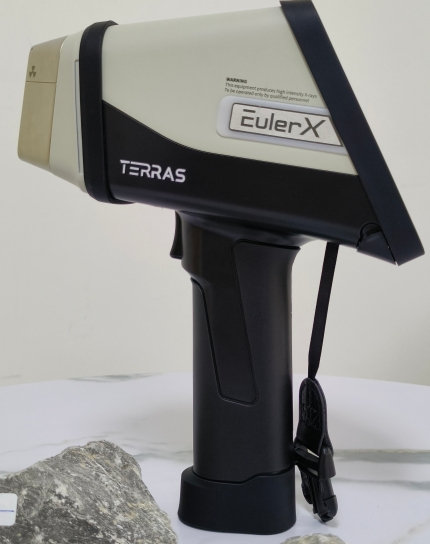
Terras EulerX600 Handheld Soil Analyzer
Getting Started
Final Thought: XRF analysis pulls back the curtain on the hidden composition of our soil. It transforms a handful of dirt from a mystery into a rich dataset, empowering us to make smarter decisions for our health, our crops, and our planet.
By understanding this technology, you're better equipped to ask the right questions, interpret crucial data, and contribute to a deeper understanding of the ground we all stand on.
About Terra Scientific
Terra Scientific is a high-tech manufacturer specializing in the development and application of X-ray technology products. We are committed to becoming a world-class provider of X-ray industrial inspection solutions. Terra Scientific currently offers a range of products to global customers, including handheld alloy analyzer, handheld precious metal analyzer, handheld mining analyzer, benchtop precious metal analyzers, in-line analyzer, and spectrometer modules, along with XRF analyzers. We continuously serve global clients in fields such as mechanical manufacturing, metal processing, aerospace, petrochemicals, mining and geology, food safety, environmental protection, and scientific research.
To learn more, please don't hesitate to contact us via email at sales@terra-scientific.com, or visit our website at http://www.terra-scientific.com
Join Us
Subscribe to our email list for updates & promotions.